


A guide to bespoke forklift attachment design and manufacture
Standard forks and off-the-shelf attachments cover a lot of jobs, but not all of them. When the load is awkward, access is tight or you’re having to improvise to get through the shift, it costs you time and adds risk.
This guide explains what bespoke forklift attachments are, when they’re worth considering and what you’ll need to have to hand before you speak to a manufacturer.
What is a bespoke forklift attachment?
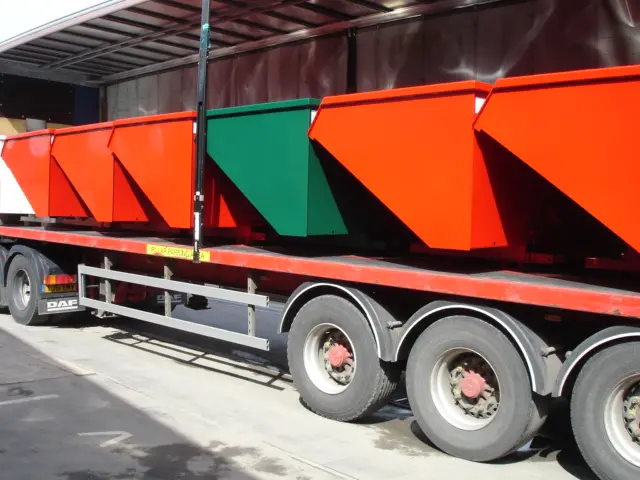
A bespoke forklift attachment is engineered for situations where a standard attachment can’t handle the task safely or efficiently. Instead of forcing a standard tool to do work it’s not meant for, a bespoke attachment is designed around what you’re lifting and how you need to move it on site.
That could be altering the shape, length or contact points so the load sits securely, adding support to prevent damage or adapting an attachment so it can work in a tight aisle or yard. Sometimes it’s a completely new build for a very specific requirement.
Bespoke also doesn’t always mean starting from scratch. In plenty of cases, it’s a standard attachment with a few key changes so it fits your operation properly.
Signs you need a bespoke attachment
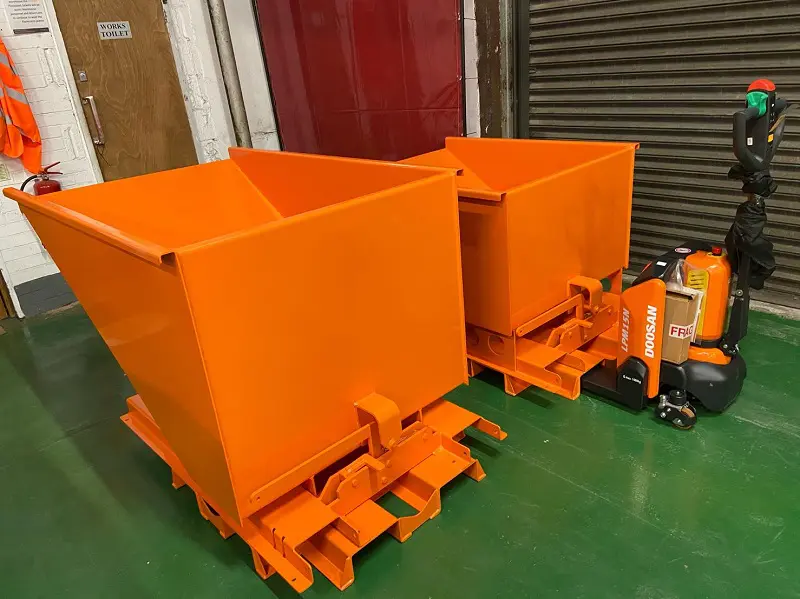
For most sites, standard attachments are the right starting point. There’s usually a standard option that can help you do the job faster and more effectively. Bespoke comes in when standard kit can’t do the job, or when it turns a straightforward handling task into a slow one with too many extra moves.
If any of the below is familiar, it could be time to consider a bespoke option.
You’re spending time “making it work”
If a simple lift turns into shuffling the load, repositioning or taking a second run at it, the attachment isn’t doing its job properly. It might be possible, but it isn’t efficient, and it leaves more room for mistakes.
The load never feels stable
If operators have to slow down because the load feels like it’s going to roll, slip or shift, that’s a sign the attachment isn’t right. A bespoke design lets you hold the load properly so it lifts and travels in a controlled way.
You’re working around the site, not with it
Tight aisles, awkward approach angles, low doors, confined yard space or uneven ground: some sites make a standard attachment hard work. A change to the attachment’s size or how it picks up the load can make the lift simpler.
People are still doing too much by hand
If you have to manually finish the job (e.g. pushing the load into place or lifting by hand), it slows everything down and increases the risk of injuries. We’ve covered this in detail in our manual vs mechanical handling comparison guide, but if it happens every day, it’s costing you.
Near-misses, damage or noise are creeping in
If you’re dealing with damaged stock, excess noise or the odd “that was close” moment, the attachment isn’t right for the way you’re working. It often only takes a small tweak to put it right. For one customer, we created a bespoke skip with rubber bonding inside – it reduces noise when bricks land and adds a protective layer that protects the skip body.
The bespoke design process, step by step
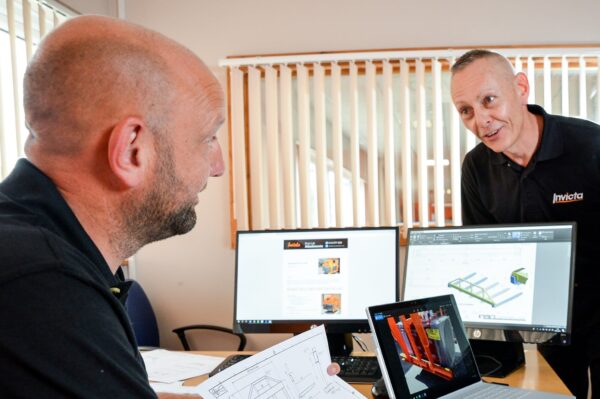
Bespoke shouldn’t feel like a complicated project. It’s usually a straightforward back-and-forth where we get clear on what you need to handle and what’s getting in the way.
Here’s how a bespoke build typically works:
1) Tell us what you’re handling and what you need to achieve
Start with the problem. What are you lifting? What’s going wrong with your current setup? Are you trying to speed the job up, reduce damage, improve safety or make something possible that isn’t right now?
2) Share the load details and measurements
To design something that fits the task, we’ll usually need to know the basics of the load: typical weight, dimensions, what it’s made of and anything that affects how it behaves (e.g. if it’s fragile, uneven or likely to roll or shift).
3) Confirm the truck and operating environment
Tell us what truck the attachment needs to fit and where it needs to work. That includes the conditions on site, like tight aisles, yard space, uneven ground, indoor/outdoor use and anything else that changes how the attachment should be built.
4) We recommend the right approach
In plenty of cases, we can start from one of our standard attachments and tweak it to suit your site. That’s often quicker than a ground-up build and it gets you a fit-for-purpose result. If there isn’t a good starting point, we’ll talk through a purpose-built option instead.
5) We manufacture it in-house
Once the design is agreed, we manufacture the attachment here in the UK. Because it’s made in-house, we keep control of quality end-to-end. The attachment is built to your specifications, and we check it’s fit for purpose before it leaves us.
6) Delivery and support
We’ll get it dispatched to site and make sure you’ve got what you need to use it properly. If you’ve got questions once it’s in use, you can pick up the phone and talk to someone who understands the attachment and why it was built that way.
Lead times: it depends on the design. Once the design is finalised and production has started, a bespoke attachment can be turned around in as little as 2-3 weeks, while more complex builds could take 6-8 weeks. We’ll let you know timescales for your specific attachment.
What you need to specify (a quick checklist)
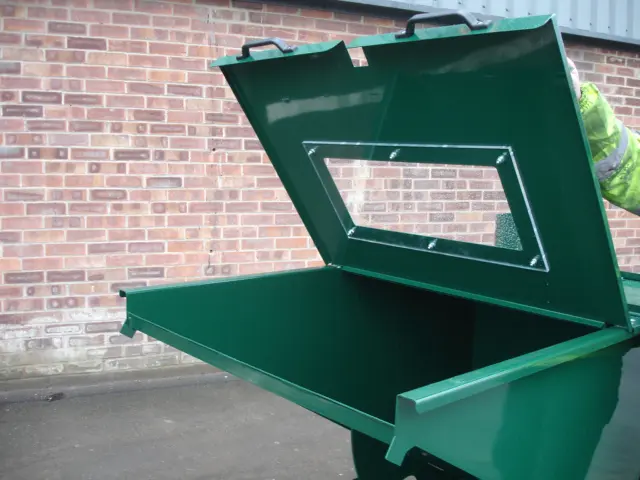
You don’t need a full spec to get started. If you can send a few photos, an idea of the load and what you’re trying to achieve, we can usually take it from there.
If you can share any of the details below, it helps us understand your setup and make sure we’re recommending the right attachment first time. It also cuts down on the back-and-forth.
The basics (enough to start the conversation)
- What you’re handling (load type)
- Typical and maximum load weight
- Load dimensions (even approximate)
- What you need to improve (speed, safety, damage, space constraints)
- A couple of photos of the load and how it’s handled today
Details that help us get it right first time
- How the load is picked up, moved and placed (your workflow)
- Load behaviour: does it roll, slip, crush, scratch, chip or shift?
- Forklift/telehandler make/model and capacity
- Carriage class / fork dimensions (if known)
- Any hydraulics needed and what auxiliary lines you already have
- Your operating environment (indoors/outdoors, uneven ground, wet areas, noise-sensitive sites)
- Frequency of use (daily/weekly) and duty level
Safety and compliance considerations
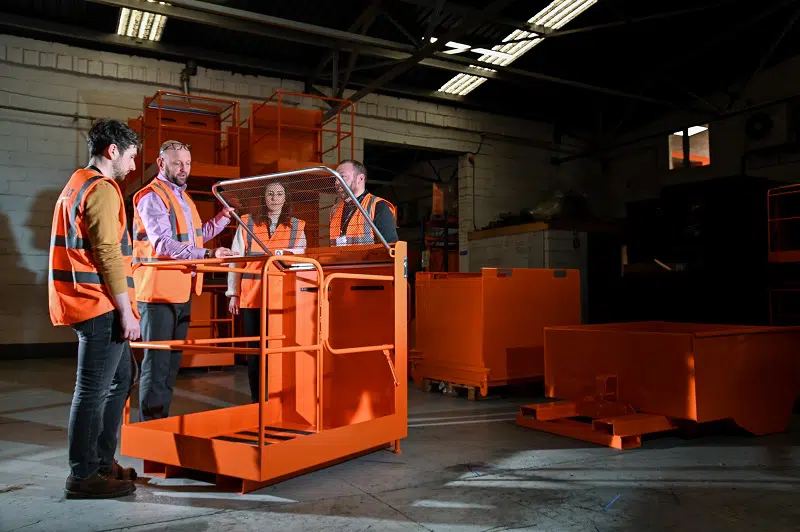
Bespoke attachments are built for a specific job, but they still need to work safely on a specific truck, in a real working environment. A few checks early on save problems later.
Make sure it’s compatible with the truck
Before you commit to a design, confirm what it needs to fit: truck type, carriage details, any hydraulics and how the attachment will mount and operate.
Understand the capacity impact
Fitting an attachment changes the truck’s lifting capacity and stability. That’s normal, but it needs to be accounted for. Our guide on why forklift trucks topple over explains more. The practical takeaway is that operators should always have the correct lifting limits for the truck with the new attachment fitted, and the capacity information may need updating.
Keep LOLER in mind from the start
LOLER matters for attachments as well as the truck. We’ll make sure it’s designed and built with that in mind, and we’ll be clear about what you need to do on site, including thorough examinations and working within the rated limits.
What bespoke looks like on site (our real-world examples)
A major brick manufacturer: a quieter, heavier-duty skip
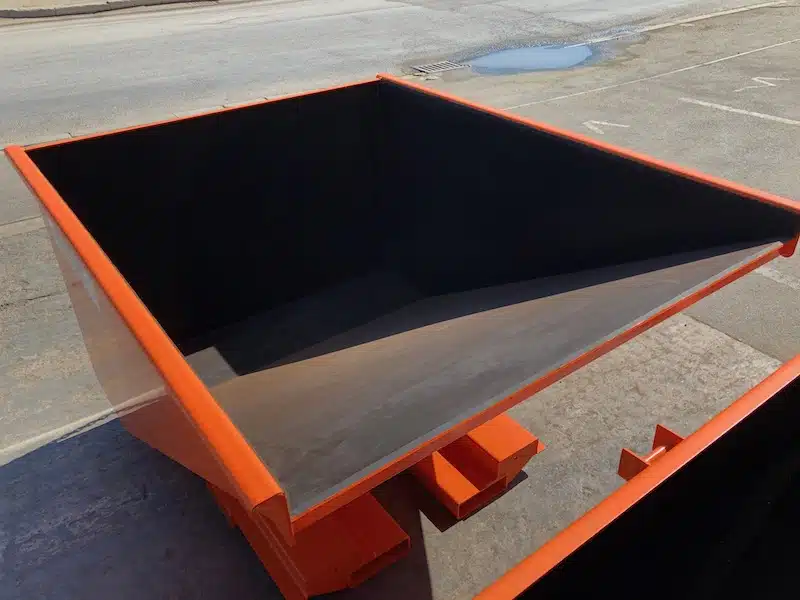
The manufacturer needed skips for broken brick at their main depot, but previous skips had struggled with the weight. They also had a noise problem – bricks landing in the skip make a lot of impact. On top of that, the skips had to work with their double pallet handlers. We adapted a combi skip with a 5mm body, 385mm pockets and a bespoke base, then bonded rubber to the inside faces to take the edge off the noise and protect the skip.
Sunderland City Council: offloading three rows of bins at once
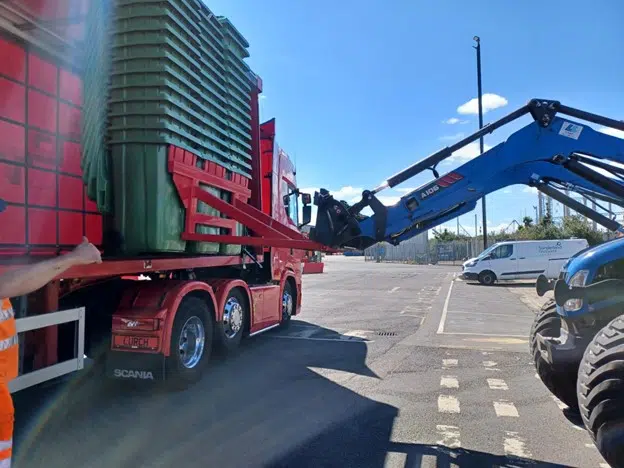
Sunderland City Council wanted a quicker way to unload stacked domestic bins from delivery lorries. Their original attachment could only take one row at a time, so the job took longer than it needed to when large orders arrived. We built a fork-mounted, triple-row wheelie bin stacker so they could lift three rows of stacked bins in one go. It’s a simple change that cuts the number of lifts needed and gets the load off the ground faster.
Siddall & Hilton: a coil boom built for 1.6 tonne loads
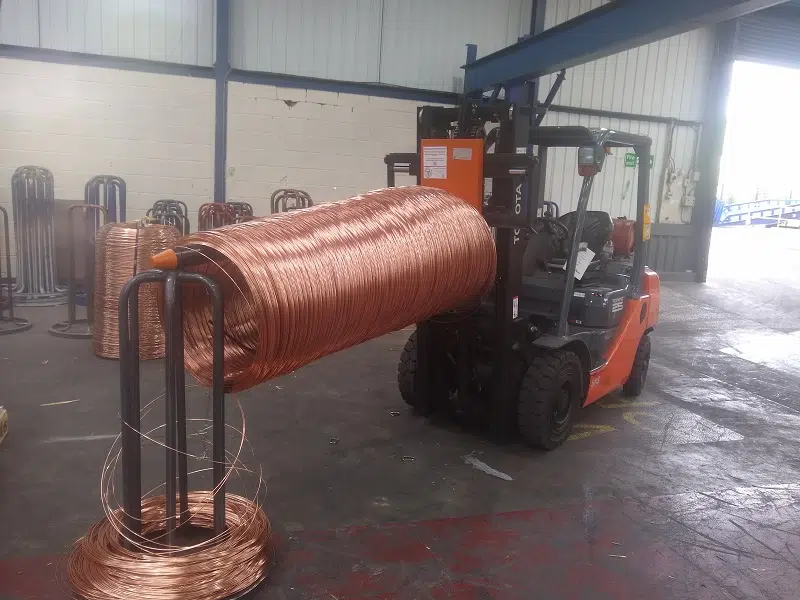
Siddall & Hilton needed to move wire orbit coils across the site safely, and wanted to lift two at a time to get more from the truck. Each coil weighed 800kg, so the attachment had to handle 1.6 tonnes. We built a bespoke carriage-mounted coil boom to suit their Class 2a carriage, increased the boom diameter to 85mm, and made it 1800mm long to hit the safe working load they needed. That way they can move coils the way they want to without pushing the truck or the attachment beyond its limits.
FAQs about bespoke forklift attachments
What is a bespoke forklift attachment?
A bespoke (custom) forklift attachment is built for a specific handling job where standard forks or an off-the-shelf attachment won’t do it properly. It’s designed around your load, your truck and your site.
What are the benefits of using a bespoke forklift attachment?
The main benefits are fewer workarounds and a handling method that suits the job. That usually means:
- safer handling and better control of the load
- less product damage
- fewer manual steps
- quicker, more consistent lifts
It also helps with compliance because the attachment is designed with safe use and regulations like LOLER in mind.
What factors should I consider when designing a bespoke forklift attachment?
You don’t need to be an engineer – that’s our job. What helps most is being clear on what you’re lifting, where you’re lifting it, what truck it needs to fit and what “better” looks like for you. From there, our in-house team can work out the design details and the best route (adapt a standard design or build purpose-made).
How long does it take to create a bespoke forklift attachment?
It depends on the design, but we’re set up to move quickly. Once the design is finalised and production has started, a bespoke attachment can be turned around within 2–3 weeks. More complex builds could take longer. We’ll let you know the timescales for your specific attachment.
How much does a bespoke forklift attachment cost?
Costs vary depending on how complex the build is. A bespoke attachment can cost more than a standard product, but it’s often worth it when it removes daily workarounds, cuts manual handling or reduces damage and downtime.
Can you adapt a standard forklift attachment rather than starting from scratch?
Yes, and it’s common. In many cases we can take one of our standard attachments and modify it to suit your job. That might be changing the size, extending a jib, adding a lining to a tipping skip or adjusting contact points so the load sits properly.
Ask us about a bespoke build
If you’ve got an awkward load, a tight space or a handling job that’s taking longer than it should, it’s worth a quick chat. You don’t need drawings to get started. A couple of photos, the load details you know and the truck it needs to fit is enough to get the conversation started.
Tell us what you’re handling and how you want to handle it. We’ll help you work out whether a bespoke build or a standard attachment is the right fit.
Find out more about bespoke attachments or get in touch.
Back to all blog posts