


Can forklift attachments affect your insurance?
Fit an attachment to a forklift and you can change capacity, stability, visibility and load security. After an accident, an insurer or investigator might need to know how the attachment was chosen, fitted, maintained and used.
The simple answer is that yes, forklift attachments can affect insurance claims. The paperwork, inspection reports and maintenance records show what the attachment was designed to do and how it was looked after.
Your insurer will still decide each claim against the policy and what happened. If you need to know how your own cover applies, speak to your insurer or broker.
Do forklift attachments affect insurance?
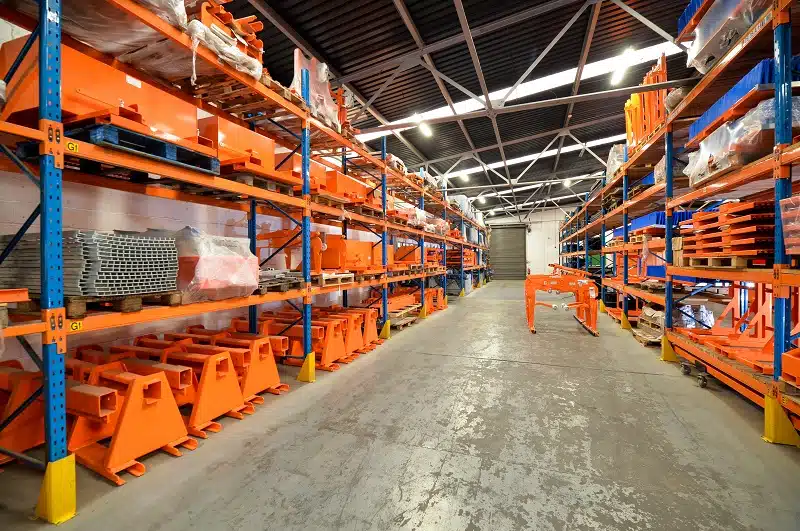
They can change how the forklift handles and what needs to be checked and recorded. After an incident, you may be asked to show that the attachment was right for the truck and the job.
After an incident, you might be asked to provide:
- The attachment’s suitability for the forklift and task
- Its rated capacity, identification and product paperwork
- Inspection, maintenance and repair history
- Current Thorough Examination reports where the Lifting Operations and Lifting Equipment Regulations 1998 (LOLER) apply
- Operator training, risk assessments and site procedures
- How the attachment was fitted and used at the time
Complete records help show that the attachment was suitable and safe to use.
Why attachments change forklift risk
Fork extensions affect a truck differently from a bucket, scissor grab, jib or work platform. Each combination needs its own checks.
Capacity, load centre and stability
An attachment adds weight to the forklift. It can also move the load’s centre of gravity further away from the truck.
Both changes reduce the truck’s residual capacity: the weight it can safely lift with the attachment fitted.
Check the capacity data for that truck and attachment combination. The rating plate may need updating. Our guide to why forklift trucks tip over explains how load position affects stability.
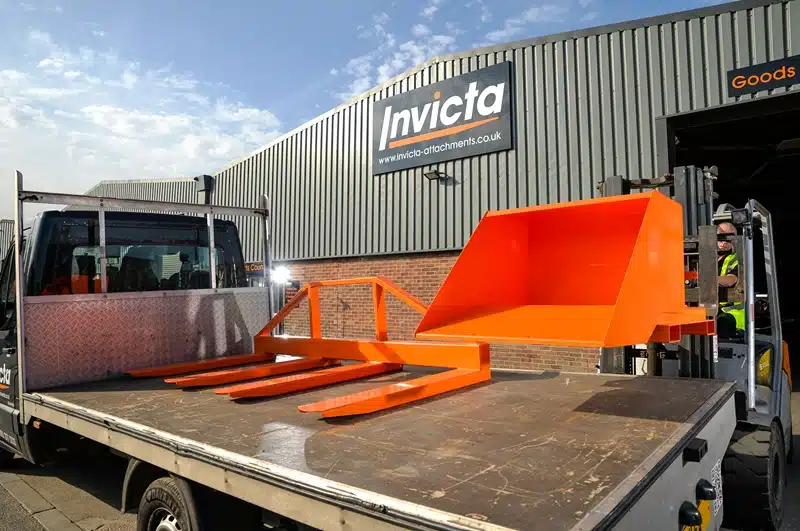
Visibility, load security and site conditions
A large attachment can block the operator’s view. An awkward load may roll or shift as the truck turns, particularly on uneven ground.
Check the full journey, including pick-up, travel and placement.
The HSE’s safe lifting guidance covers load weight, centre of gravity, securing the load and the safe limits of the equipment.
Using an attachment for the wrong job
Site-made changes, an unapproved repair or a different load can affect the attachment’s strength and behaviour.
Lifting people needs particular care. HSE says fork-mounted platforms without controls linked to the truck should only be used in exceptional circumstances. Check its working platform guidance first.
The records that matter after an incident
Keep everything together under the attachment’s serial number. That gives you one clear record of when it was examined, what work has been done and who is trained to use it.
| Record | What to retain | Why it matters |
|---|---|---|
| Attachment identification | Make, model, serial number, rated capacity and a photograph of the rating plate | Matches every record to the right unit |
| Product paperwork | Instructions, purchase records, Declaration of Conformity and relevant conformity marking | Confirms its intended use |
| Truck compatibility | Forklift details, attachment fit and revised capacity information where required | Confirms the combination was checked |
| Examination and inspection | Thorough Examination reports, written scheme and PUWER inspection records | Shows when it was checked and what was found |
| Maintenance and repair | Service history, defect reports, repair and re-certification documents | Shows what was done about faults or damage |
| People and procedures | Training, authorisation, risk assessments and pre-use check records | Shows who could use it and what checks were in place |
Attachment identification and certification
Start with the rating plate. You should be able to identify the attachment, read its capacity and match it to the paperwork supplied with it.
New machinery should come with the correct UKCA or CE marking, a Declaration of Conformity and instructions in English. Which marking applies depends on the product and when it was placed on the market.
If the plate is missing or unreadable, ask the manufacturer or a competent specialist to identify the attachment before use.
LOLER Thorough Examination reports
LOLER requires lifting equipment to be fit for purpose, suitably marked and thoroughly examined by a competent person.
HSE’s guidance gives normal maximum intervals of:
- Six months for equipment used to lift people
- Six months for lifting accessories
- 12 months for other lifting equipment
- The interval set by a written scheme of examination drawn up by a competent person
An examination may also be needed after an accident, serious damage or a major repair. Our LOLER guide explains the process.

Maintenance, repairs and defects
A Thorough Examination tells you the condition of the attachment on the day it was checked. Damage can happen on the next shift, so pre-use checks still matter.
Write down what was found and what you did about it. HSE guidance says a dangerous defect must be put right before the equipment is used again.
See our attachment lifespan guide or repairs and refurbishment service.
Operator training and site procedures
Operators need to know how to use each attachment fitted to the truck. That includes how it is secured, what it does to the truck’s capacity and what to check before setting off.
PUWER requires anyone using or supervising work equipment to have the right training. If you introduce a new attachment or change the job, check whether the team needs further instruction.
Record who is trained and authorised to use each attachment. Daily checks should cover retaining pins, hydraulic connections, welds and any securing or locking mechanisms.
What to check before you buy an attachment
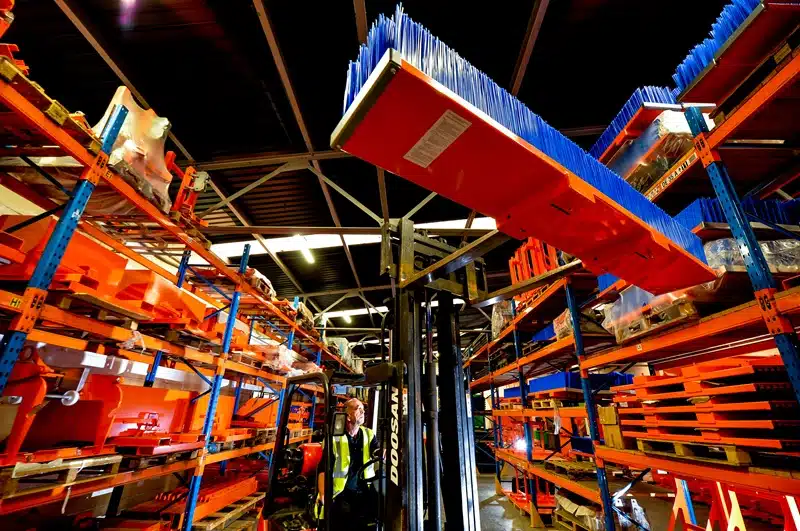
Before you buy, confirm who made the attachment, what it can carry, which truck it fits and what paperwork comes with it. Check where you’ll get parts or advice later too.
For used or imported equipment with an unclear history, ask for the serial number, rating information, instructions, conformity paperwork and examination records. You need those basics before putting it to work.
We design, build and test our mechanical forklift attachments at our Leeds facility. You can also come back to us for technical support and aftercare, repairs or a Thorough Examination.
Forklift attachment checklist: are your records up to date?
Before the next shift, can you confirm:
- The attachment can be identified and its rating is legible
- The relevant instructions and conformity documents are on file
- Compatibility with the forklift has been checked
- The truck’s capacity information is correct for the attachment fitted
- Required Thorough Examination reports are current
- Pre-use checks, defects, maintenance and repairs are recorded
- Operators are trained and authorised for the attachment and task
- The attachment is being used within its rated capacity and intended purpose
- You’ve checked with your insurer or broker if the attachment, job or working environment has changed significantly
When to get advice
Stop and get the attachment checked before use if:
- Product documents are missing or cannot be matched to the unit
- The rating plate is damaged or unreadable
- The attachment has been modified or received a major repair
- Compatibility with the forklift is unclear
- An examination has identified a defect
- The attachment is moving to a new truck or a higher-risk task
If you’re unsure about the attachment itself, speak to us. We can help identify it, check whether it suits the truck and job, or give advice on repairs and Thorough Examinations. Your insurer or broker can answer questions about the policy.
Forklift attachments and insurance FAQs
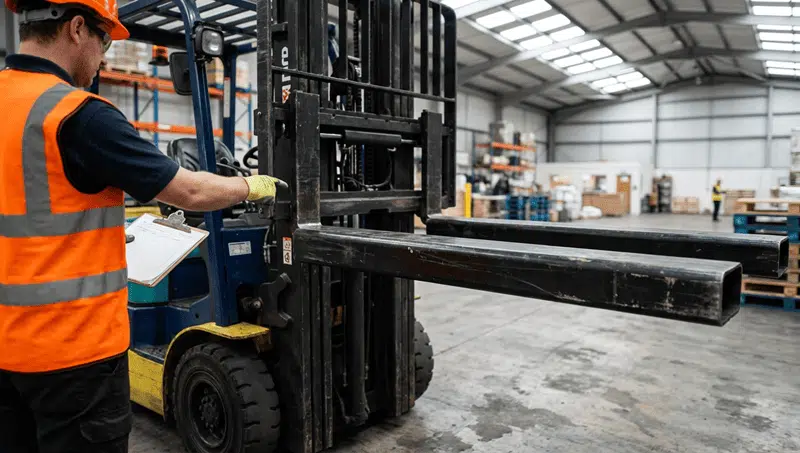
Can an uncertified forklift attachment invalidate insurance?
It depends on your policy and the situation, but it often comes down to whether you can show the attachment was suitable and properly managed. If documents are missing, the equipment isn’t right for the job or examinations are out of date, it becomes harder to show that.
Do forklift attachments need LOLER inspections?
Yes, if they’re used for lifting, lowering or supporting loads. The attachment itself and how it’s being used determine whether LOLER applies and what level of examination is needed. If you’re not sure where your setup sits, a competent person (such as your Thorough Examination provider) should be able to confirm it quickly.
How often do forklift attachments need a Thorough Examination?
As a general rule, equipment used to lift people, and lifting accessories, are usually examined every 6 months. Other lifting equipment is usually examined every 12 months. Your examiner will confirm what applies to your specific setup, so it’s worth checking in with them.
What documents should I keep for a forklift attachment?
Keep the instructions, rating and identification details, compatibility information, conformity paperwork, Thorough Examination reports, maintenance history and operator training records. Keep everything together so you can trace the attachment’s full history quickly if you ever need to.
Need help checking your forklift attachments?
If you’re not sure whether an attachment is right for your truck and the job, talk to our team. We’ll ask what you’re lifting, which truck you’re using and how the attachment is being used, then give you a straight answer on what needs doing next.
We can help with attachment suitability, repairs, refurbishment and LOLER Thorough Examinations. Call us on 0113 277 1222, email [email protected] or get in touch through our contact form.
Back to all blog posts
