


Forklift attachment maintenance: what to check before every shift
You should always give every attachment a quick check before the shift starts. You’re looking for anything that could make it unsafe to use. Start with visible damage and fitment, then work through the checks set out by the manufacturer. The checklist below covers the main areas.
It only takes a few minutes, and it can catch a fault before it becomes a breakdown. If something doesn’t look right, take the attachment out of use and report it.
What is a forklift attachment pre-shift inspection?

A pre-shift inspection is a short check carried out before an attachment is put to work. It checks that the attachment is right for the job and fitted securely. It should also pick up any obvious damage before the attachment is used.
It doesn’t replace planned maintenance or a LOLER thorough examination, which are more detailed checks carried out at the intervals set for the equipment. If you change the attachment during a shift, check the newly fitted one before you use it.
The pre-shift forklift attachment safety checklist
Your final checklist should reflect the site risk assessment and the manufacturer’s instructions for that attachment. Anyone carrying it out needs to know what normal looks like and what to do if something’s wrong.
| Check | What to look for | What to do if there is a problem |
|---|---|---|
| 1. Attachment and job | Confirm it’s the right attachment for the load, task, truck and working environment. | Don’t fit or use it until compatibility has been confirmed. |
| 2. Identification and capacity | Check that identification, safe working load and other required markings are there. Confirm the truck’s capacity information still applies with this attachment fitted. | Stop if markings are missing or unreadable. Don’t guess the capacity. |
| 3. Forks and fork pockets | Check for cracks, bends, distortion, uneven wear, damaged heels or tips, and damage or obstruction inside fork pockets. | Take the equipment out of service and report the damage. |
| 4. Securing devices | Check any pins, bars, chains or locking mechanisms fitted to the attachment. Nothing should be damaged or loose and locking mechanisms should engage properly. | Don’t use the attachment if a securing part is missing, loose or damaged. |
| 5. Structure and welds | Look over the frame, lifting points and welds for cracks, distortion, heavy corrosion, impact damage or loose or missing parts. | Arrange a competent assessment. Don’t attempt a structural repair on site. |
| 6. Moving and hydraulic parts | Where fitted, check moving parts including pins and cylinders for damage, excessive movement or leaks. | Don’t operate leaking or damaged equipment. Report it for maintenance. |
| 7. Load-contact surfaces | Check the parts that support, grip or touch the load. Look for wear, damage or missing protective material that could affect control. | Clean the surface if you can do it safely. Report wear or damage before use. |
| 8. Cleanliness and obstruction | Remove loose debris from locking points and moving parts. Check that nothing will stop the attachment fitting or operating properly. | Clear the obstruction safely or report it if dismantling or repair is needed. |
| 9. Fitment and security | Once fitted, check that the attachment sits correctly and every securing point is engaged. | Refit it correctly. If it still doesn’t sit securely, take it out of service. |
| 10. No-load function test | Where relevant, test the attachment through its normal movements without a load. Listen and watch for anything unusual. | Stop the test if movement is erratic, restricted, noisy or different from normal. |
| 11. Previous defects | Check the site record or handover information for ongoing faults, restrictions or maintenance due. | Don’t use equipment with an unresolved safety defect or overdue action. |
How do you inspect forklift forks for damage?
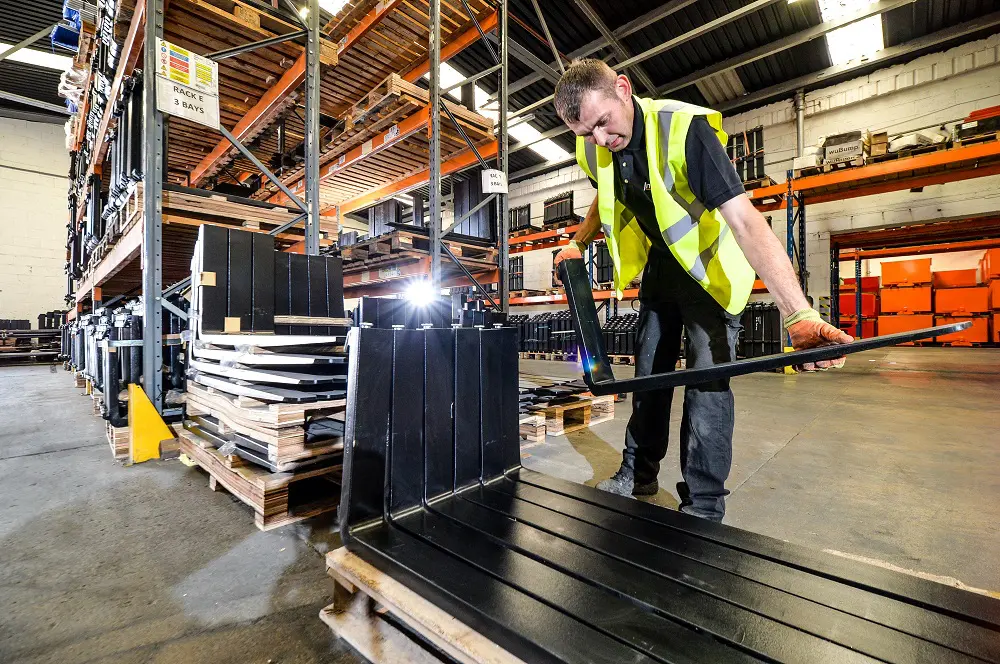
Start by looking at both forks together, then inspect each one from the hook or mounting point down to the tip. You’re looking for anything bent or worn, as well as forks that no longer sit as they should.
Cracks and surface damage: pay attention to the heel, where the blade meets the shank, as well as hooks and any welded areas. Fresh damage to the paint can be a sign of an impact underneath.
Bends and twists: the forks should sit straight and level, without one tip standing noticeably higher or pointing in a different direction.
Uneven wear: compare the pair. A clear difference in blade thickness, heel condition or tip shape needs to be looked at.
Retaining hardware: check retaining parts like locks are present, secure and working as intended.
Fit on the carriage: look for unusual movement, poor seating or worn and damaged hooks.
Don’t try to straighten a bent fork or repair a crack yourself. It needs to be measured against the relevant standard and manufacturer guidance by someone competent to make the call.
What should you check on different types of attachment?

The general checklist applies across fleets, but you’ll need to adjust it for the attachment you’re using. The manufacturer’s operating and maintenance instructions should always be the basis for your final checks.
Fork-mounted attachments
With a fork-mounted attachment, start inside the fork pockets. They need to be clear and undamaged, with enough room for the forks being used. Then check that every pin, bar, screw, chain or lock is fitted and fully engaged. The attachment should sit properly, without any unusual movement.
Jibs and lifting attachments
Look over the frame and lifting points for damage or distortion. If the setup includes hooks, shackles or other lifting accessories, make sure they’re the correct items and check them under their own inspection requirements.
Forklift skips
Start with the release system. It should work properly and return to a secure position. Then look over the body, base and welds for any impact damage, distortion or heavy corrosion. Clear anything blocking the mechanism if you can do so safely.
Hydraulic attachments
Look over hoses, cylinders and connections for leaks or damage. Cuts, bulging and loose fittings all need attention. Make sure the guards and moving parts are intact, then carry out a no-load test and stop if the attachment loses pressure or behaves differently from normal.
What should you do if you find a defect?
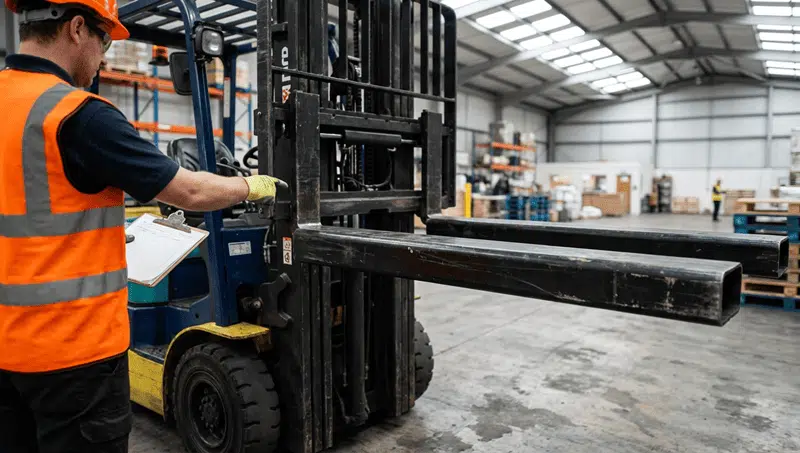
If a defect could affect safe use, take the attachment out of service. Lower it into a safe position, isolate it and use your site’s system to add a clear warning so it can’t be picked up for the next shift. Report the problem through your agreed procedures and record enough detail to identify the attachment and its fault.
A competent person can examine the fault and decide whether the attachment can be repaired. If it can’t, it will need replacing. Don’t put it back into service until it’s been cleared for use and never hide a fault with a quick patch because the shift is busy.
How do pre-shift checks fit with PUWER and LOLER?
PUWER covers the day-to-day condition and safe use of work equipment. HSE says inspection frequency should reflect the site risk assessment and how the equipment is used, with manufacturer guidance taken into account. In many cases, that should include a quick visual check before use.
LOLER covers lifting equipment and lifting operations, including thorough examinations where required. A competent person should confirm what applies to each attachment and set the correct examination schedule.
Neither check replaces the other. A current thorough examination report doesn’t make visible damage safe until the next examination, and a completed daily checklist doesn’t replace a LOLER thorough examination. If you’re not sure what applies to an attachment, get advice from an expert based on the equipment and how it’s used.
Forklift attachment maintenance FAQs
What should I check on a forklift attachment before every shift?
Check that the attachment is right for the truck and fitted securely. Look over the attachment and securing devices for damage or unusual wear, and check any moving parts. Always follow the attachment instructions and your site checklist.
How do I inspect forklift forks for damage?
Compare both forks, paying particular attention to the heels and hooks, and check that the pair still sits straight and level. Stop using forks that have changed shape or condition and arrange a competent assessment. Don’t try to repair them yourself.
Do forklift attachments need a LOLER thorough examination?
Yes. If a forklift attachment is used to lift or support a load, it will normally fall under LOLER. Most lifting attachments need a thorough examination every six months, unless a competent person has set a different schedule. Pre-shift checks don’t replace a thorough examination.
What should I do if a forklift attachment is damaged?
Stop using it and report the defect. A competent person should assess it, and it shouldn’t return to service until it’s been repaired or replaced and cleared for use. Don’t attempt repairs without the right expertise.
Does fitting an attachment change a forklift’s lifting capacity?
Yes. An attachment adds weight to the front of the truck and may move the load further from the mast. Both affect how much the forklift can safely lift, so the truck will need to be derated.
Make sure its capacity plate covers the exact truck-and-attachment combination. If it doesn’t, don’t use the attachment until the revised capacity has been confirmed and the capacity plate updated. Read more about how attachments change forklift capacity.
When should you call Invicta?

If you find a crack, bent frame, worn fork, damaged locking point or recurring hydraulic problem, it needs a proper assessment before the attachment goes back to work.
Our technical support and aftercare team can help you work out what happens next. If more than advice is needed, we can carry out repairs and refurbishment or arrange thorough examination testing for forklift forks and attachments.
Need help assessing a damaged attachment? Get in touch and we’ll give you a straight answer on whether it can be repaired or needs replacing.
Back to all blog posts
