


LOLER and PUWER regulations explained: what you need to know
If you’re responsible for forklifts or forklift attachments, you’ve probably come across the terms LOLER and PUWER. Both are UK regulations that set out how work equipment and lifting equipment need to be looked after, and both apply to forklifts and attachments in different ways.
This guide explains what each one covers, how they overlap and what you actually need to do to stay compliant – including how often inspections are due and what happens if you fall behind.
What is LOLER?
LOLER stands for the Lifting Operations and Lifting Equipment Regulations 1998 and is enforced by the Health and Safety Executive (HSE). It’s the regulation that covers equipment used for lifting or lowering loads. Forklifts, cranes, hoists, work platforms and lifting accessories all fall under it.
If you employ people, you’re self-employed or you have control over lifting equipment in a workplace, LOLER applies to you. The core requirement is simple: your equipment needs to be strong enough for the job, properly maintained and you must have regular thorough examinations.
What counts as lifting equipment under LOLER?
LOLER covers a wide range of equipment, including:
- Forklift trucks and telehandlers
- Forklift attachments used in lifting operations – jibs, work platforms, scissor grabs
- Lifting accessories – chains, ropes, slings and hooks
- Overhead cranes and hoists
If an attachment is used to lift a person, like a work platform fitted to a forklift, the LOLER requirements around examination become stricter.
What is PUWER?
PUWER stands for the Provision and Use of Work Equipment Regulations 1998. It has a broader scope than LOLER and applies to all work equipment, not just equipment used for lifting.
Under PUWER, equipment must be suitable for its intended use, properly maintained, inspected at appropriate intervals and only operated by people who are trained and competent to use it.
How PUWER applies to forks and attachments
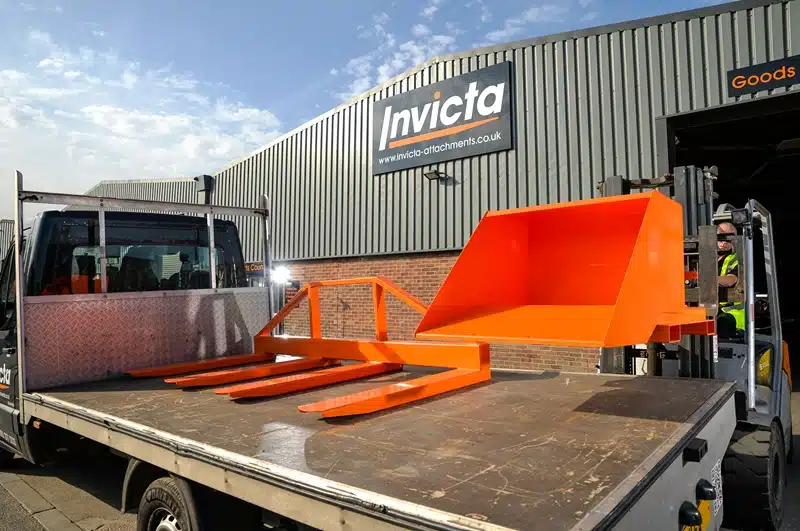
Every forklift and every attachment counts as work equipment, so PUWER applies alongside LOLER. In practice, this means:
- You need to keep maintenance records
- Operators must be trained and competent
- Equipment must only be used for what it was designed for – this matters if you’re using a bespoke or modified attachment, which needs to be certified for its intended use
What’s the difference between LOLER and PUWER?
PUWER covers all work equipment. LOLER is an additional, more specific layer that applies on top of PUWER for anything used for lifting. A standard forklift truck is subject to both at the same time.
| PUWER | LOLER | |
|---|---|---|
| Scope | All work equipment | Lifting equipment only |
| Focus | Suitability, maintenance and training | Strength, stability, safe lifting and thorough examination |
| Inspection basis | Risk-based, no fixed interval | Fixed statutory intervals |
| Applies to forklifts? | Yes, always | Yes, when lifting is involved |
Think of PUWER as the baseline that applies to any piece of kit in your workplace, and LOLER as the extra layer that applies specifically because forklifts and attachments are used for lifting.
How often does lifting equipment need to be inspected?
LOLER Through Examination intervals
Under LOLER Regulation 9, the standard intervals are:
- Lifting accessories (chains, slings, hooks): every 6 months
- Equipment used to lift people (for example, a work platform fitted to a forklift): every 6 months
- All other lifting equipment, including standard forklift trucks: every 12 months, unless a written examination scheme drawn up by a competent person specifies otherwise
- After installation or exceptional circumstances – an accident, significant damage or a long period out of use – equipment needs to be examined before it goes back into service
A written examination scheme can replace the fixed intervals above where it’s justified, but it needs to be drawn up by a competent person; you can’t declare this yourself informally on site.
PUWER inspection intervals
PUWER doesn’t set a fixed interval. Instead, inspections need to happen at “suitable intervals” based on the risks and how the equipment is used. Equipment that’s used constantly or in harsh conditions needs checking more often than equipment that’s only used occasionally. Records of each inspection need to be kept until the next one is complete.
Who carries out LOLER Thorough Examinations?
Thorough examinations have to be carried out by a “competent person”. That means someone with the practical knowledge to spot defects and judge how serious they are.
This person should be independent of the management team responsible for the equipment. In most cases, that rules out your own maintenance team carrying out the examination. In practice, you should always use a qualified, third-party inspector.
Once the examination is done, the examiner issues a written report. If they find a defect that poses an immediate danger, they’re required to notify both you and the HSE.
Not sure who’s due an inspection or when? Invicta’s LOLER thorough examination and re-certification service uses qualified, independent examiners to help you get a clear picture of where your fleet stands.
What happens if you don’t comply?
If the HSE finds non-compliant equipment on your site, they have the power to act on it. They can issue a notice telling you to fix the problem within a set timeframe, or, if the risk is serious enough, a notice that stops the equipment being used immediately. In the most serious cases they can prosecute, issue fines and company directors can be held personally liable.
Beyond the legal risk, there’s the safety risk itself. Forklift accidents injure a significant number of UK workers every year and unexamined lifting equipment is one of the more preventable causes.
Practical compliance checklist
LOLER
- Identify all lifting equipment and accessories on site
- Confirm examination intervals – 6 months for accessories and people-lifting equipment, 12 months for standard lifting equipment
- Appoint a competent, independent examiner
- Keep all written examination reports on file
- Act on any defects identified in reports straight away
- Re-examine after any accident, significant repair or modification
PUWER
- Confirm all equipment is suitable and safe for its intended use
- Establish a maintenance schedule and keep records
- Make sure all operators are trained and competent
- Carry out risk assessments for equipment use
- Inspect equipment at risk-appropriate intervals and record the results
Not sure if your forklifts and attachments are up to date with LOLER requirements? Talk to our team – we’ll give you a straight answer on where you stand.
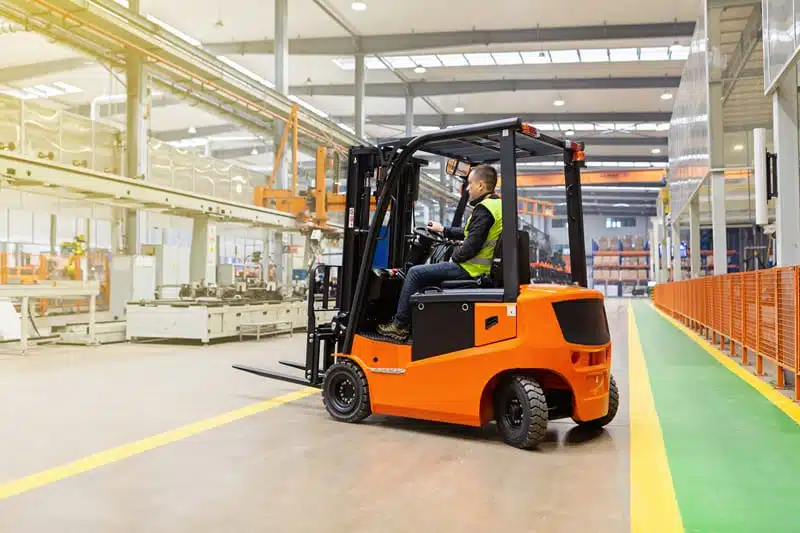
LOLER, PUWER and forklift attachments – what you need to know
Attachments are subject to both regulations, just like the forklift they’re fitted to. If an attachment is bespoke or has been modified, it needs to be designed and manufactured to handle the loads it’ll actually carry, and it needs a Declaration of Conformity to prove it.
If an attachment has been repaired or refurbished, it may need to be re-examined and re-certified before it goes back into use. An attachment that isn’t certified or compliant can affect the forklift’s rated capacity, and that’s a risk to anyone working near it.
We build attachments to UK standards with compliance built in, and we offer LOLER-compliant re-certification following repair or refurbishment. Find out more about our repair and refurbishment service.
If you want to go deeper on any of this, we’ve also covered what affects a forklift attachment’s lifespan and when to repair versus replace and whether forklift attachments need to be certified on the blog.
Where this leaves you
LOLER and PUWER exist to keep people safe around equipment that can genuinely hurt someone if it fails. If you’re not sure where your business currently stands, getting a thorough examination booked is the simplest first step.
We’ve been manufacturing forklift attachments from our Leeds facility for over 30 years and inspecting them for almost as long, so we know what a proper examination looks like and what good compliance actually involves.
Talk to our team about getting your forklifts and attachments booked in for a LOLER thorough examination. Call us on 0113 277 1222, email [email protected], or reach out through our contact form.
Back to all blog posts
